

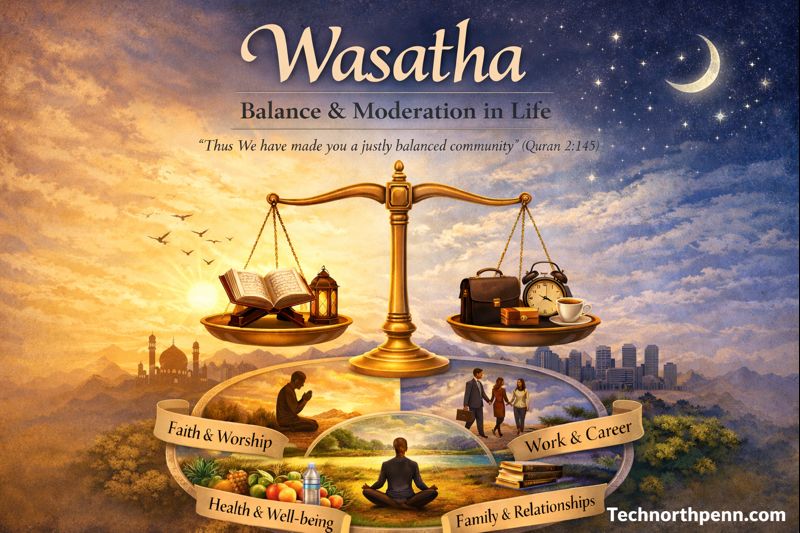
Introduction: The Essence of Wasatha
The term wasatha comes from the Arabic root “wasat,” which signifies middle, balance, and moderation. It is a concept deeply embedded in Islamic teachings and is recognized as a guiding principle for achieving a harmonious life. In an age where extremism, overconsumption, and stress are rampant, wasatha provides a blueprint for living with equilibrium in all aspects of life.
In essence, wasatha is about avoiding extremes—whether in behavior, thinking, or consumption—and striving for a lifestyle that is fair, just, and spiritually fulfilling. Its applications extend from personal development to societal harmony, making it relevant across cultures and times.
The Origin and Significance of Wasatha
The Quran refers to the idea of balance and fairness in the verse:
“Thus We have made you a justly balanced community (ummatan wasata)…” (Quran 2:143)
Here, ummatan wasata emphasizes the role of moderation as a central value. It highlights that a balanced approach is not only a personal virtue but also a collective responsibility. Wasatha is a foundation for justice, ethical conduct, and social cohesion, ensuring that societies thrive while respecting moral and spiritual boundaries.
Core Principles of Wasatha
1. Spiritual Moderation
Wasatha ensures that religious devotion is neither excessive nor insufficient. It encourages consistency in worship and ethical behavior, preventing burnout while fostering a deep connection with God.
2. Ethical Balance
A person practicing wasatha avoids moral extremes. This includes honesty, fairness, and compassion in daily interactions, ensuring personal integrity and social harmony.
3. Emotional Stability
Wasatha promotes emotional regulation. By avoiding extreme anger, jealousy, or attachment, individuals achieve a more peaceful and resilient mindset.
4. Practical Everyday Application
The principle of wasatha extends to daily routines, including work, leisure, financial management, and health, advocating for a balanced lifestyle that enhances well-being.
Wasatha in Daily Life
Financial Balance
Living with wasatha in finances means spending wisely, saving responsibly, and giving charity. It encourages avoiding both extravagance and miserliness, promoting a sustainable economic life.
Dietary Moderation
Wasatha in eating habits promotes neither overindulgence nor extreme restriction. Balanced nutrition leads to improved health, energy, and longevity.
Work-Life Equilibrium
Modern life often encourages overworking or neglecting personal needs. By embracing wasatha, individuals can balance career, family, rest, and spiritual growth, reducing stress and improving productivity.
Social Conduct
In relationships and society, wasatha fosters fairness, tolerance, and empathy. It discourages extreme behaviors such as aggression, manipulation, or blind conformity, cultivating harmony within communities.
Wasatha and Modern Society
In contemporary societies, the principle of wasatha has profound relevance:
-
Sustainable Living: Balanced consumption protects natural resources and encourages environmental stewardship.
-
Ethical Leadership: Leaders who follow moderation make fair decisions, avoid corruption, and ensure justice.
-
Mental Health: Moderation in work, media consumption, and personal habits supports psychological well-being.
-
Social Harmony: By discouraging extremes, communities can thrive peacefully, fostering mutual respect and cooperation.
Implementing wasatha at a societal level ensures equitable growth, responsible citizenship, and moral accountability.
Challenges in Practicing Wasatha
Despite its importance, wasatha is not always easy to practice. Key challenges include:
-
Cultural Pressures: Societal trends often encourage excess, materialism, or rigid extremism.
-
Personal Desires: Human tendencies towards greed, overindulgence, or extreme behaviors can disrupt balance.
-
Lack of Awareness: Many people do not understand the long-term benefits of moderation in faith and life.
-
Modern Stressors: Rapid technological, economic, and social changes make maintaining equilibrium challenging.
Overcoming these challenges requires education, self-reflection, and conscious effort toward ethical and balanced living.
Practical Tips for Adopting Wasatha
-
Set Clear Boundaries: Balance work, family, and personal time.
-
Avoid Extremes in Consumption: Practice mindful spending and eating.
-
Cultivate Emotional Awareness: Recognize and regulate intense emotions.
-
Engage in Consistent Worship: Maintain steady spiritual practices without overexertion.
-
Promote Fairness in Society: Encourage justice and compassion in interactions and decisions.
By integrating these habits, individuals can live a life aligned with the principle of wasatha, fostering personal growth and community well-being.
Conclusion
Wasatha is more than a principle; it is a way of life that bridges faith, personal development, and societal harmony. By embracing balance and moderation, individuals can achieve spiritual fulfillment, mental stability, and ethical integrity. Societies practicing wasatha benefit from justice, cooperation, and sustainable growth.
In today’s fast-paced, polarized world, the wisdom of wasatha serves as a timeless guide, reminding us that extremes often lead to harm, while moderation nurtures stability, peace, and holistic prosperity.
Frequently Asked Questions (FAQs)
Q1: What is the meaning of wasatha?
A1: Wasatha means moderation, balance, or taking the middle path in life, avoiding extremes in behavior, thought, or lifestyle.
Q2: How is wasatha important in Islam?
A2: Islam emphasizes wasatha as a guide for fair living, spiritual balance, ethical conduct, and social harmony. It prevents negligence and extremism in worship and behavior.
Q3: Can practicing wasatha improve mental health?
A3: Yes. By maintaining balance in work, emotions, and daily habits, wasatha reduces stress, anxiety, and emotional exhaustion.
Q4: How can wasatha be applied in modern life?
A4: It can be applied in finances, diet, work-life balance, social interactions, and environmental responsibility. Practicing moderation improves quality of life.
Q5: Is wasatha only relevant to religious life?
A5: No. Although rooted in religious teachings, wasatha applies universally to all aspects of human life, including personal, social, and professional spheres.
